

Earlier this month, most Alaskans found $1,200 in their bank accounts. I hear plenty about why it wasn’t more. I almost never hear anyone ask where it came from. I’ve written a lot about who that dividend belongs to. This time, I want to talk about where it comes from.
Alaska wants the benefits of its natural resources, but we spend an awful lot of time fighting their development. We want a full dividend, good schools, safe roads, troopers, low energy costs, and no income tax. Yet project after project, too many of us say no to the very things that help pay for them.
This year, the Permanent Fund draw will provide $3.8 billion of the state’s $6.5 billion in unrestricted revenue. The Fund has been our largest revenue source since 2018, but it didn’t fall from the sky. Since statehood, Alaska has collected $164.4 billion in petroleum revenue, and oil money helped build the Fund we depend on today. Even without the Fund draw, oil provides 69 percent of the state’s other unrestricted revenue.
Last spring, I wrote about the Resource Trap, our habit of expecting one resource to carry the whole load. Oil and gas, mining, timber, fishing, tourism, and agriculture all have a place in our economy. We shouldn’t have to choose one at the expense of the others.
Article VIII of our Constitution calls for the “utilization, development, and conservation” of our resources for the “maximum benefit of its people.” Notice it says all three. Development and conservation were never meant to be enemies.
But right now, we’re out of balance. In the coming fiscal year, petroleum is expected to bring the state $1.88 billion in unrestricted revenue, mining $189 million, and fisheries taxes about $24 million. Those figures don’t measure the full value of fishing, mining, or tourism to our communities. But they do tell us where much of the money to pay our bills comes from.
Development works when we let it. Willow spent years tied up in court. Today, it’s a major reason North Slope production is forecast to climb from about 459,000 barrels a day to more than 650,000 by 2034. Producers invested a record $9.2 billion in Alaska last year.
Closer to home, Nova Minerals received its final state permits this week to mine antimony west of the Susitna River. Antimony is a critical mineral our military needs, and America has gone decades without a modern domestic supply chain. The Pentagon has committed $43.4 million to the project, and Nova plans to refine the ore at Port MacKenzie.
Last week, the federal government awarded $249 million to finish the Port MacKenzie Rail Extension. Alaska had already invested more than $180 million in that 32-mile railroad before work stopped in 2017. For nearly a decade, the railbed sat in the woods, largely finished, with permits in hand. In March, I called it a museum piece. It isn’t anymore.
When I testified before the Alaska Railroad board this spring, I told them the problem wasn’t a lack of vision. It was a lack of follow-through. We’d already done much of the work, spent the money, and then walked away. The obstacle wasn’t some outside group. It was us.
I’m grateful to the Mat-Su Borough, Senator Sullivan, Congressman Begich, and Governor Dunleavy for helping get this project moving again. A borough study estimates that heavy cargo shipped through Port MacKenzie could cost 36 percent less than shipping through Seward.
The missing link is the West Susitna Access Road. Today, ore from the West Susitna Mineral District moves by air or winter trail. Last session, the House Finance Committee redirected the road’s federal highway funding to other projects. Those dollars came with a 90 percent federal share and a 10 percent state match. I offered the floor amendment that restored $47.5 million, and it took some hard conversations to find the votes.
Mine, road, port, rail. A mine needs a road. The road gets the minerals out. The port gets them to market. The railroad connects the port to the rest of Alaska. Each project makes the others more valuable, but only if we finish the job. Otherwise, they’re just proceeds we talk about and never collect.
There are legitimate concerns about the road. The Susitna River Coalition has raised questions about salmon habitat, the river crossings, and heavy trucks sharing the road with families. Those concerns deserve answers through permitting and design. But we ought to be looking for ways to solve problems, not treating every problem as a reason to stop.
And the state’s revenue forecast doesn’t even count the gasline, ANWR, Donlin, or Ambler.
Fifty years ago, the Trans-Alaska Pipeline spent years tied up in court. In 1973, a key Senate vote ended in a 49–49 tie, broken by Vice President Spiro Agnew. Congress cleared the way, the pipeline was built, and Alaskans later voted to save part of that oil wealth for future generations.
We are those generations.
Our parents and grandparents made decisions that helped build the Permanent Fund, and we’ve been collecting the benefits ever since. But they also left us salmon runs, mountains, wildlife, and an Alaska people from around the world still come to see.
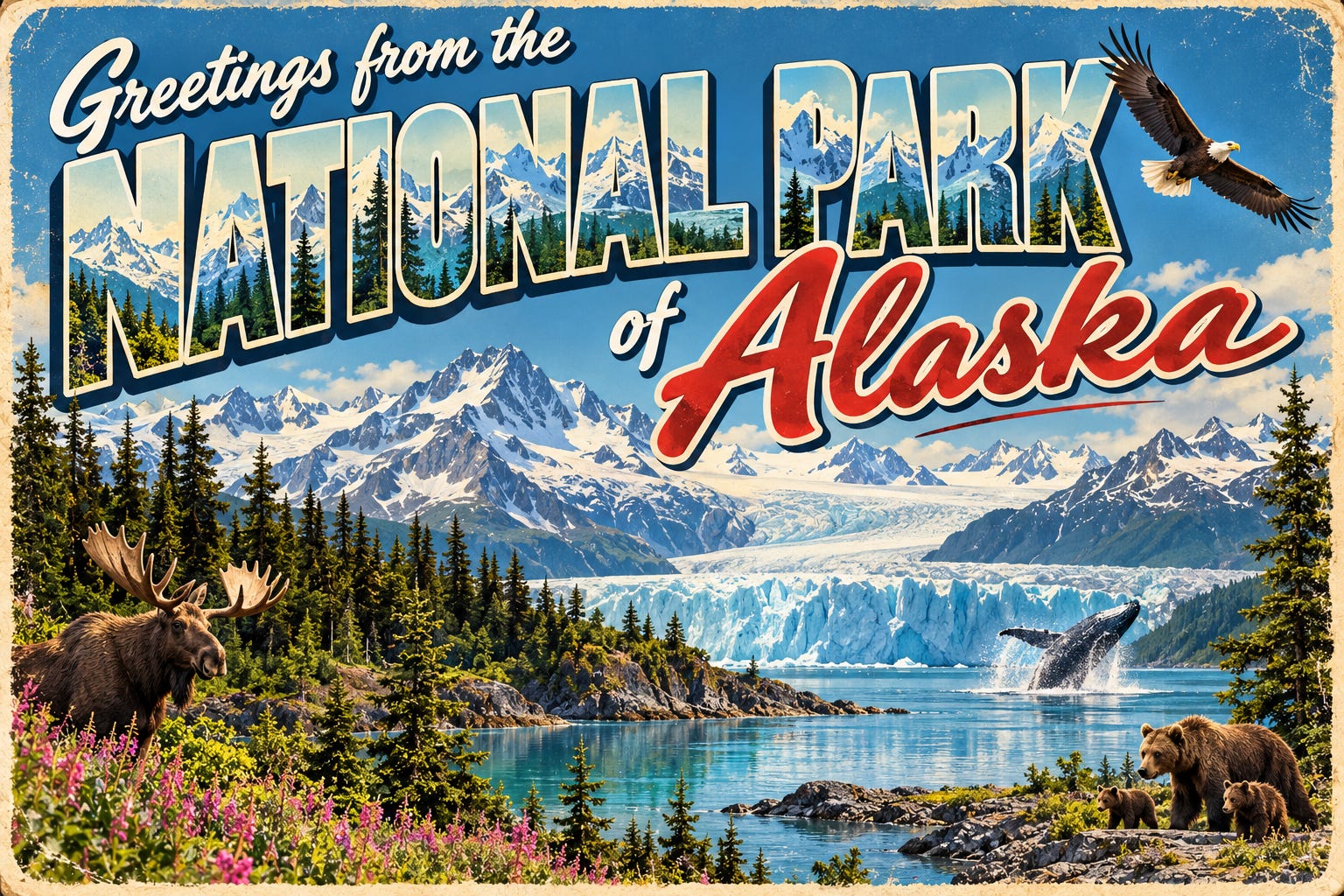
Fifty years from now, will our grandchildren inherit a growing Permanent Fund supported by new resource development? Or the National Park of Alaska with a smaller dividend, more deferred maintenance, and a long list of projects we never built?
I don’t believe Alaska has to choose between protecting what makes this state special and developing the resources that help pay our bills. We can do both. We have done both. But it takes planning, good engineering, responsible permitting, and the willingness to finish what we start.
Next October, when the dividend shows up, I hope we’ll ask where that money came from and make sure what we’re doing today keeps it coming for our children.
Our grandparents fought for a yes on a pipeline. It’s our turn.
“I don’t believe Alaska has to choose between protecting what makes this state special and developing the resources that help pay our bills. We can do both. We have done both. But it takes planning, good engineering, responsible permitting, and the willingness to finish what we start.”💯💯💯